

More Pasta, More Joy—Join the Fun!
Pesto alla Genovese
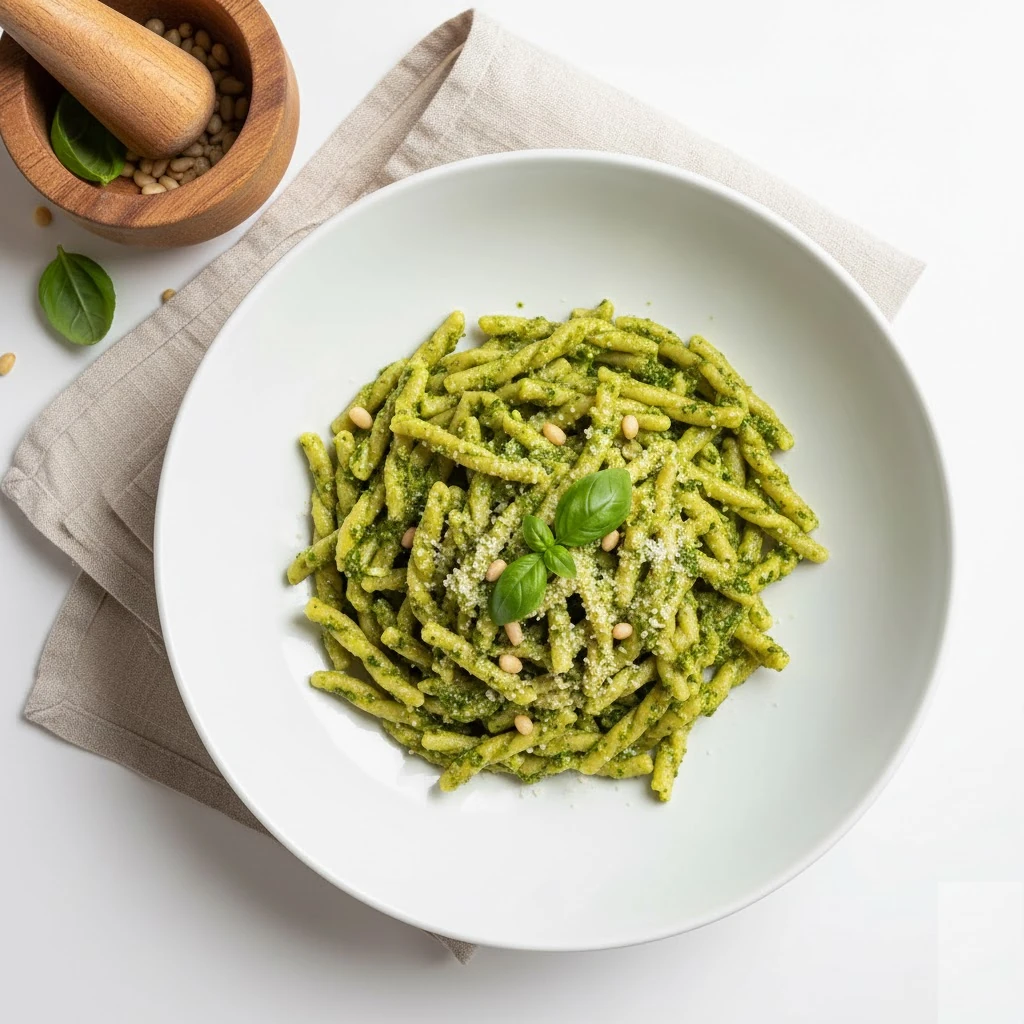
Bright, herby, and aromatic, Pasta al Pesto alla Genovese is the quintessential Ligurian pasta that celebrates fresh basil and the Mediterranean spirit.

Pesto alla Genovese (Authentic Italian Basil Pesto)

*Pesto alla Genovese* is more than just a sauce; it is the vibrant, aromatic essence of the Liguria region. Made from just seven simple ingredients—basil, pine nuts, garlic, olive oil, and two types of cheese—authentic pesto is defined by its method. The classic technique of gentle crushing ensures the basil remains bright green and fragrant, yielding a stunning, emulsified sauce that is far superior to any store-bought variety. We emphasize the traditional preparation for the very best results.


📜 History: The Sauce of Genoa

The name *pesto* comes from the Italian verb *pestare*, meaning “to crush” or “to pound,” referencing the traditional preparation method using a mortar and pestle (*mortaio*). While crushing herbs and garlic is an ancient practice, modern Pesto alla Genovese—using basil as the primary herb—was officially documented in the mid-19th century in Genoa, the capital of Liguria. The dish's ingredients reflect Liguria's unique terrain: sea air for flavorful basil, olives for the famous Ligurian olive oil, and proximity to Sardinia for Pecorino Sardo cheese.


🌿 Ingredients: The Seven Sacred Components

The rules for authentic Pesto are strict since the quality of the ingredients determines the final outcome:

  • *Basil:* Must be small-leafed, young, and sweet. Traditional *Genoese Basil* is preferred since it lacks the minty bitterness of other varieties. Use the leaves only, discarding the stems.
  • *Oil:* High-quality *Ligurian Extra Virgin Olive Oil* is mandatory. It is light, fruity, and subtle, allowing the basil to remain the star.
  • *Cheese:* A blend of *Parmigiano Reggiano* (for texture and aging) and aged *Pecorino Sardo* (sheep's milk cheese, for salt and sharpness).
  • *Nuts:* *Pine nuts* are the classic choice, though walnuts are sometimes used locally.
  • *Garlic:* Use only a small clove, preferably one that has been germ-removed since too much garlic can overpower the delicate basil.
  • *Salt:* Coarse sea salt.
The seven ingredients for Pesto alla Genovese laid out: fresh basil leaves, pine nuts, garlic, olive oil, Parmigiano-Reggiano, Pecorino Sardo, and coarse salt.
Image 1: Authentic Pesto relies on the quality and freshness of just seven simple ingredients.

🔪 The Technique: The Art of Crushing (Pestare)

Step 1: The Mortar (or Blender) Base

  • *Traditional Mortar Method:* In a marble mortar, start by crushing the garlic clove and the pine nuts with coarse salt until they form a smooth paste.
  • *Modern Blender Method:* If using a food processor, pulse the garlic, pine nuts, and salt first. *Use the pulse function only*—never blend continuously since friction creates heat.
A wooden pestle crushing pine nuts and garlic against the base of a marble mortar.
Image 2: The process begins by crushing the hardest ingredients first—garlic and pine nuts—to create the initial binding paste.

Step 2: Crushing the Basil

  • Add the basil leaves, a small handful at a time, to the paste in the mortar.
  • Gently crush and rotate the leaves against the side of the mortar with the pestle. The motion should be a *gentle grinding circle*, not a pounding action.
  • Continue this process until all the basil leaves are reduced to a bright green, creamy paste. Work quickly to prevent the basil from oxidizing (turning brown).
Fresh basil leaves being gently crushed with a wooden pestle in a mortar, showing the rich green oil starting to form.
Image 3: Crushing the basil gently is the key to achieving a bright green color and maximizing the volatile aromatic oils.

Step 3: Finishing the Sauce

  • Once the basil is a paste, quickly stir in the grated Parmigiano Reggiano and Pecorino Sardo.
  • Finally, slowly drizzle in the extra virgin olive oil while stirring constantly until the sauce reaches a thick, emulsified consistency.

Step 4: Storage and Use

  • Pesto should be stored in an airtight container in the refrigerator.
  • To prevent browning, *always pour a thin layer of olive oil over the surface* before sealing the container.
  • Serve Pesto *alla Genovese* with Ligurian pasta like *trofie* or *trenette*, usually boiled with potato and green beans.
A spoonful of finished Pesto alla Genovese showing a thick, bright green, emulsified texture.
Image 4: The final Pesto should be thick, emulsified, and possess a rich, vibrant green color.

💡 Troubleshooting & Chef's Notes

Issue Cause Solution/Tip
*Pesto is brown/dark green.* Basil oxidized due to slow crushing, heat, or exposure to air. Work quickly, especially when crushing the basil. For the modern method, keep the food processor in the freezer before use to keep the basil cold.
*Pesto is oily/separated.* Too much oil added too quickly, or too much cheese/nuts relative to the basil. Try stirring vigorously or crushing more basil (or nuts) into the mixture to help the sauce emulsify.
*Pesto is bitter/too sharp.* Using non-Genoese basil (too minty) or too much garlic (germ left in). Always remove the green germ from the center of the garlic clove. Use only small, young basil leaves.
*Hard to crush.* Mortar is too small, or nuts/garlic were not crushed fine enough first. Ensure the hard ingredients are a fine paste before adding the leaves. Work in small batches.

Pesto alla Genovese

Cook Time 10 minutes
Total Time 10 minutes
Servings: 4
Course: Pasta
Cuisine: Italian
Calories: 650

Ingredients
  

  • 12 oz trofie, linguine, or your favorite pasta
  • 2 cup fresh basil leaves
  • 1/2 cup Pecorino Romano Cheese Grated
  • 1/2 cup Pine Nuts
  • 1/2 cup Extra-virgin Olive Oil
  • 2 clove Garlic
  • Salt and Black Pepper

Method
 

  1. Equipment needed : Large pot for boiling pasta
  2. Cook the pasta in boiling salted water until al dente. Drain and keep some pasta water.
  3. In a food processor, combine fresh basil, grated Pecorino Romano cheese, pine nuts, garlic, and a pinch of salt.
  4. Pulse the ingredients while slowly drizzling in the olive oil until you have a smooth pesto sauce.
  5. Toss the cooked pasta with the pesto, adding pasta water as needed.
  6. Season with black pepper and additional salt if necessary.
  7. Garnish with extra basil leaves and grated Pecorino Romano cheese.
Stay a While—Join My Circle of Food-Loving Friends

Join my newsletter now to make sure you never miss a recipe or cooking tip from me!

Leave a Reply

Your email address will not be published. Required fields are marked *

Recipe Rating


share this recipe:

Facebook
Twitter
Pinterest

Still hungry? Here’s more

Zuppa Gallurese

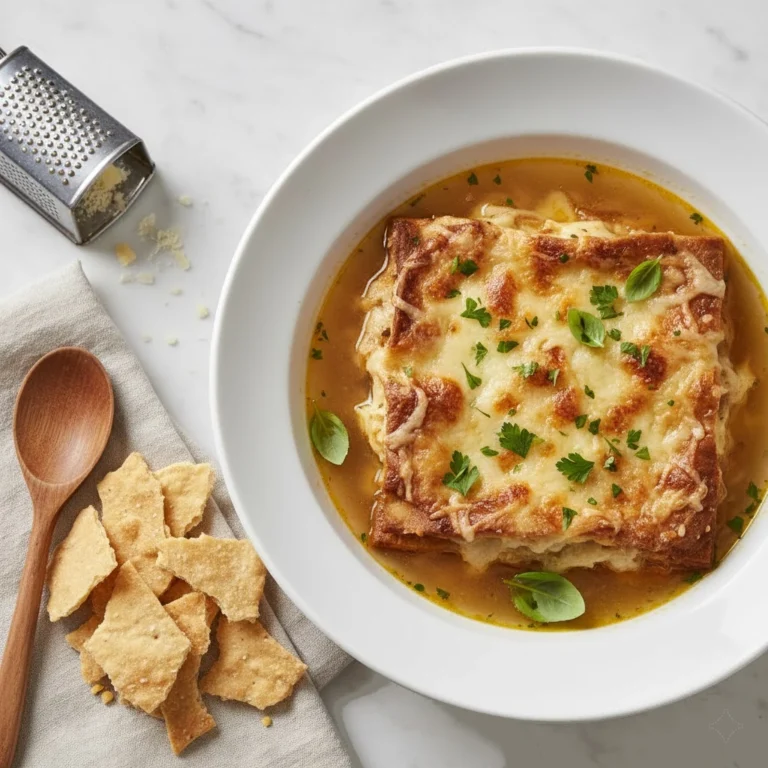
A hearty Sardinian specialty, Zuppa Gallurese is a savory, baked layered soup combining bread, cheese, and rich broth.

Read More