

More Pasta, More Joy—Join the Fun!
Gelato Artigianale
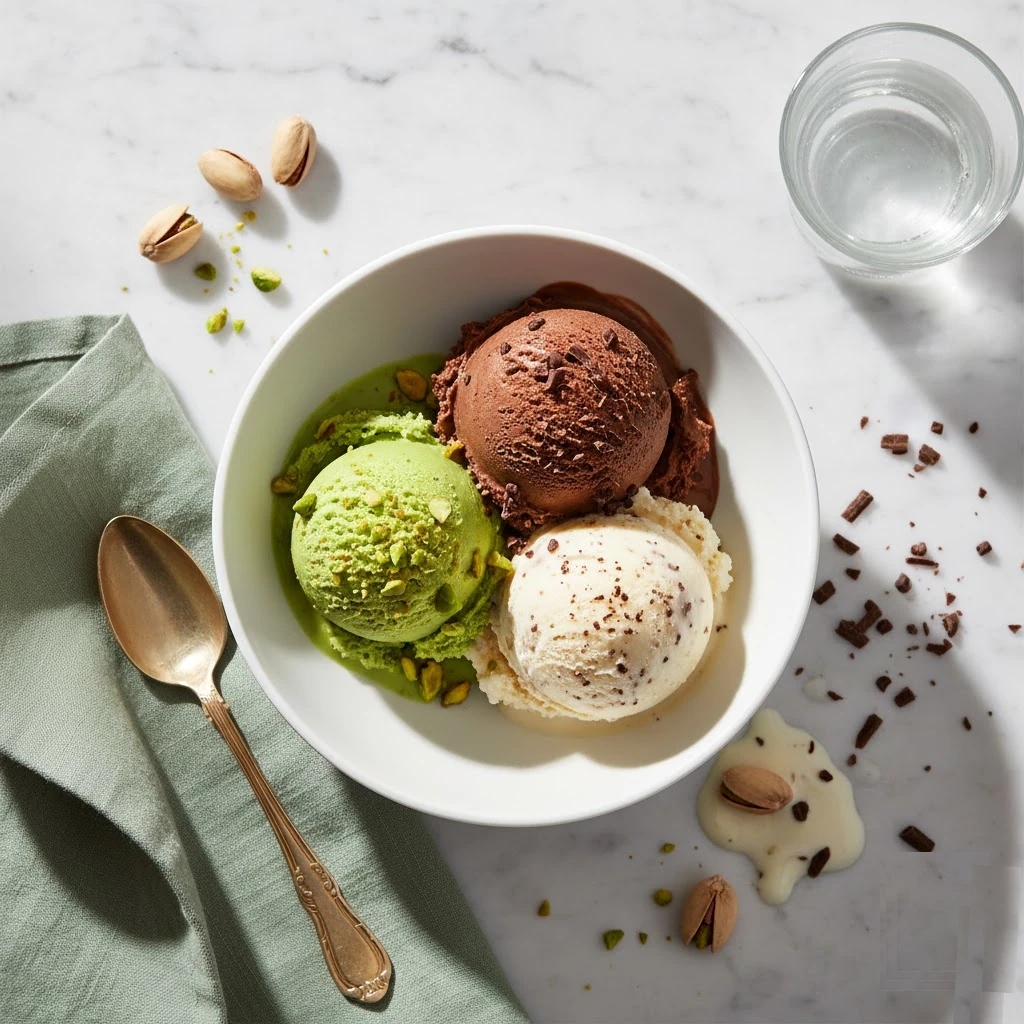
Creamy, dense, and intensely flavored, Italian gelato is churned slowly for a velvety texture that melts luxuriously on the tongue.

Gelato Artigianale (Authentic Italian Ice Cream)

Gelato is more than just Italian for “ice cream”—it is a distinct frozen dessert characterized by its *intense flavor* and *velvety smooth texture*. The difference lies in the science: Gelato uses more milk and less cream than ice cream, is churned at a significantly lower speed, and is served at a warmer temperature. These factors result in a product that is *denser* (less air) and *silkier* on the palate, allowing the true flavor of the ingredients to shine without being dulled by extreme cold or fat content.


📊 The Science of Smoothness

Understanding the key differences is crucial for achieving the perfect texture:

  • *Lower Fat:* Gelato contains less cream and often less egg yolk (or none) than ice cream.
  • *Lower Overrun (Air):* Gelato is churned more slowly, incorporating only 20–30% air (compared to 50–100% in commercial ice cream). This density is what makes it so rich.
  • *Warmer Serving Temperature:* Gelato is served about 10–15°F warmer than ice cream. This ensures that your tongue registers the full depth of flavor since the fat and sugar are not fully frozen.

🥛 Ingredients: Focusing on Milk

The base for gelato prioritizes milk and relies on superior flavoring ingredients:

  • *Milk:* Whole milk forms the majority of the base.
  • *Cream:* Used sparingly compared to American ice cream, often just enough to bind the mixture.
  • *Sugar:* A blend of *granulated sugar* and often a secondary sugar (like dextrose or corn syrup) is used to control the freezing point and prevent ice crystals from forming.
  • *Flavoring:* For classics like hazelnut or pistachio, use high-quality, pure pastes. For fruit flavors (*frutta*), fresh, ripe fruit purées are essential.
Milk, cream, sugar, and egg yolks (if used) being gently stirred in a saucepan to create the gelato base.
Image 1: The foundation of gelato is a milk-heavy base, often gently heated to pasteurize (if using egg yolks).

🔪 The Technique: Maturation and Slow Churning

Step 1: Making the Base and Pasteurization

  • In a saucepan, heat the milk, cream, and sugars. If making a *crema* base (using egg yolks), whisk the yolks and temper them with the hot milk mixture.
  • Heat the combined base gently to *180°F (82°C)*. This pasteurizes the egg yolks (if used) and fully dissolves the sugars. *Do not boil.*

Step 2: Maturation (The Critical Rest)

  • Strain the base through a fine-mesh sieve and chill it immediately over an ice bath to rapidly drop the temperature.
  • Transfer the chilled base to the refrigerator and allow it to *mature for 6 to 12 hours (or overnight)*. This essential step fully hydrates the proteins, deepens the flavor, and significantly improves the final texture and scoopability.
Gelato base chilling overnight in a sealed container in the refrigerator for maturation.
Image 2: Maturation is a non-negotiable step—chilling the base overnight improves flavor and yields a smoother final texture.

Step 3: Slow Churning

  • Pour the matured base into your ice cream machine.
  • Churn the mixture at a *slower speed* than you would for standard ice cream (if your machine allows). Churn until the mixture thickens to a dense, soft-serve consistency. The goal is minimum air incorporation.

Step 4: Hardening and Serving

  • Transfer the freshly churned gelato to an airtight container.
  • Place it in the freezer to *harden for at least 3 hours*.
  • *Before serving*, take the container out of the freezer and let it sit at room temperature for 5–10 minutes. Serving the gelato slightly warmer enhances the flavor and maintains the smooth texture.
A spatula scooping dense, soft gelato out of a container, showcasing the pliable, low-air texture.
Image 3: Gelato should be dense and pliable, allowing it to be served in characteristic ribbons with a spatula.

💡 Troubleshooting & Chef's Notes

Issue Cause Solution/Tip
*Gelato is hard/icy.* Not enough sugar, or too much water content (e.g., from fruit purée). Ensure precise sugar levels since sugar controls the freezing point. Always add the flavoring (e.g., fruit purée) only after the base is made.
*Gelato is too soft/melts too fast.* Too much sugar. Measure ingredients precisely. If the base contains a lot of sugar, it will never fully freeze. Ensure your machine is running cold enough.
*Texture is grainy.* The base wasn't strained, or the sugar wasn't fully dissolved before chilling. Always heat the base to dissolve sugars fully. Strain the base before maturation.
*Flat flavor.* Skipped the maturation step. Allowing the base to mature overnight is crucial for the flavors to deepen and meld completely.

Gelato Artigianale

Cook Time 30 minutes
Total Time 30 minutes
Servings: 1
Course: Dessert (Dolci)
Cuisine: Italian
Calories: 150

Ingredients
  

  • 2 cup Whole Milk
  • 1 cup Cream Heavy
  • 3/4 cup Sugar Granulated
  • 2 tsp Vanilla Extract Pure
  • Various flavorings (e.g., chocolate, fruit, nuts, coffee, etc.)

Method
 

  1. Equipment needed : A lidded container for freezing
  2. Follow your ice cream maker’s instructions
  3. In a bowl, whisk together the milk and sugar until the sugar is dissolved.
  4. Stir in the heavy cream and vanilla extract.
  5. Pour the mixture into your ice cream maker and churn according to the manufacturer’s instructions.
  6. In the last few minutes of churning, add your choice of flavorings.
  7. Transfer the gelato to a lidded container and freeze for at least 4 hours before serving.

Stay a While—Join My Circle of Food-Loving Friends

Join my newsletter now to make sure you never miss a recipe or cooking tip from me!

Leave a Reply

Your email address will not be published. Required fields are marked *

Recipe Rating


share this recipe:

Facebook
Twitter
Pinterest

Still hungry? Here’s more

Zuppa Gallurese

A hearty Sardinian specialty, Zuppa Gallurese is a savory, baked layered soup combining bread, cheese, and rich broth.

Read More