Bagna Càuda (Piedmontese Hot Dip)
Translating literally to “hot sauce” or “hot dip,” Bagna Càuda is the aromatic, umami-rich centerpiece of Piedmontese cuisine. This rustic communal dish is a blend of copious amounts of garlic, anchovies, and olive oil, slowly cooked into a thick, savory elixir, and traditionally served as a warm bath for seasonal vegetables and crusty bread. More than just a recipe, Bagna Càuda is a convivial ritual celebrating friendship, harvest, and the simple, intense flavors of Northern Italy.
History: The Salt Road Secret
Bagna Càuda hails from the landlocked region of Piedmont (Piemonte), which makes its reliance on anchovies initially surprising. The secret lies in the medieval “Salt Roads” that connected the coast of Liguria and Provence to inland Piedmont. Legend suggests that merchants avoided paying high salt taxes by concealing the valuable salt beneath cheap barrels of salted anchovies. This practice introduced anchovies—a non-taxed commodity—into Piedmontese kitchens, where the savvy peasants and winemakers quickly incorporated them into this iconic seasonal dish, traditionally served after the grape harvest.
The Three Pillars of Flavor
This dish relies on only three core ingredients. Because of this simplicity, quality is non-negotiable:
- Garlic: The quantity is generous—sometimes one full head per diner in traditional recipes. The key is how it's prepared, not how little you use!
- Anchovies: High-quality, salt-cured anchovies (which must be cleaned and de-salted) yield the best flavor, though good fillets packed in olive oil are acceptable. The anchovies completely dissolve, lending intense umami flavor, not a “fishy” taste.
- Olive Oil: Use a high-quality extra virgin olive oil, preferably one with a mild, fruity flavor so it does not overpower the garlic and anchovy mash. Some traditions also incorporate a small amount of walnut oil for a signature nutty depth.
Pre-Cooking Prep: Eliminating the Bite
The biggest challenge of Bagna Càuda is managing the garlic's pungency and preventing bitterness. There are two critical steps:
1. Removing the Germ
- Peel and slice the garlic cloves lengthwise.
- Locate the tiny green germ (the internal sprout). If this germ is left in, it can make the sauce bitter and less digestible. Remove and discard it from every clove.
2. Softening the Garlic
Before mixing with the oil, the garlic must be softened, often by a brief gentle cook in milk or water. This mellows the flavor without frying it:
- Place the sliced garlic in a small saucepan and cover it with a little milk (preferred for richness) or water.
- Bring to a very gentle simmer and cook for 5–10 minutes until the garlic is tender but still white.
- Drain the garlic thoroughly. This is the secret to a smooth, non-bitter sauce.
The Cooking Process: Low and Slow
Step 1: Melt the Anchovies
- In a terracotta pot or heavy saucepan, add a cup of olive oil and the drained, softened garlic. Cook over the lowest possible heat. The oil should never sizzle—it should barely warm.
- Add the anchovy fillets. Using a wooden spoon, gently mash the anchovies into the garlic and oil.
- Continue cooking and stirring for 15–20 minutes until the anchovies have completely dissolved into a thick paste.
Step 2: Finish the Dip
- Once the anchovy-garlic base is a homogenous, creamy mash, stir in the remaining olive oil (and butter, if using).
- Heat through just until warm and integrated. Do not let it boil or fry. The dip should be thick and glossy.
Serving: The Communal Ritual
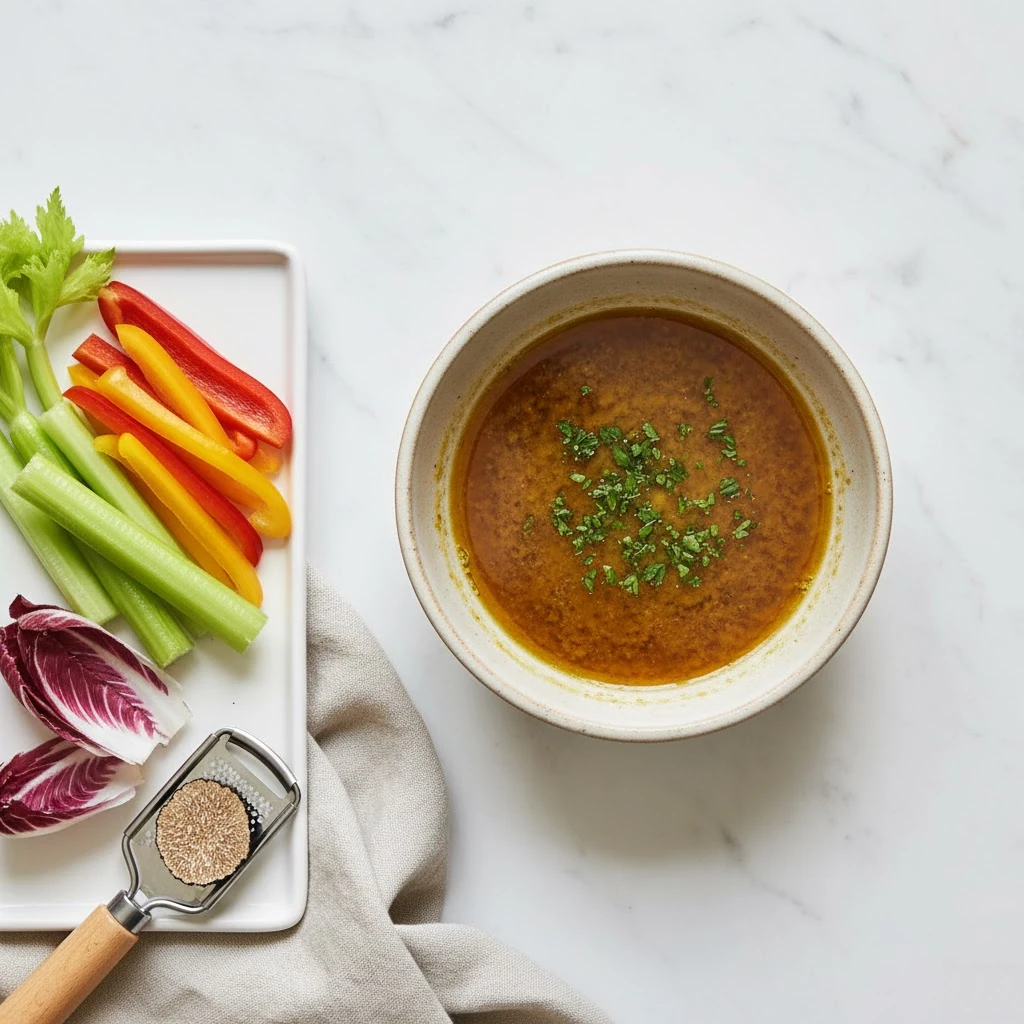
Bagna Càuda is traditionally served in a fujot (a small, individual terracotta pot with a flame underneath) or a communal dian, placed in the center of the table. The dip must be kept hot throughout the meal.
What to Dip (The Pinzimonio)
A selection of seasonal vegetables, both raw and cooked, should surround the fujot. The best pairings provide crunch and contrast:
- Raw: Cardoons (artichoke thistle), fennel, bell peppers (especially red), celery, and carrots.
- Cooked: Roasted onions (whole, cut into wedges), boiled potatoes, grilled endives, and roasted bell peppers.
- Essential: Thick slices of crusty Italian bread to wipe the bowl clean, or to catch the delicious drips!
💡 Troubleshooting & Chef's Notes
Achieving the perfect, unctuous dip is simple, provided you adhere to low temperatures:
| Issue |
Cause |
Solution/Tip |
| Sauce is too runny/oily. |
Anchovies/garlic were not fully mashed into a paste, or too much oil was used. |
Return to very low heat and mash vigorously with a wooden spoon to encourage the garlic/anchovy solids to emulsify with the oil. Adding a small, cold pat of butter can also help bind it. |
| Garlic tastes bitter or sharp. |
The garlic was browned, or the bitter green germ was not removed. |
If it's too late, a splash of cream or a little extra olive oil can sometimes temper the bitterness. Always remove the germ and cook slowly in milk/water first. |
| Not salty enough. |
Using anchovies packed in oil instead of salt-cured ones. |
Salt is usually unnecessary, but if using oil-packed anchovies, you may need a small pinch of fine sea salt at the very end. |
| Too pungent. |
Cook time was too short. |
Continue cooking very gently over low heat. The long, slow infusion of the oil breaks down the volatile compounds in the garlic, making it sweeter and more mellow. |