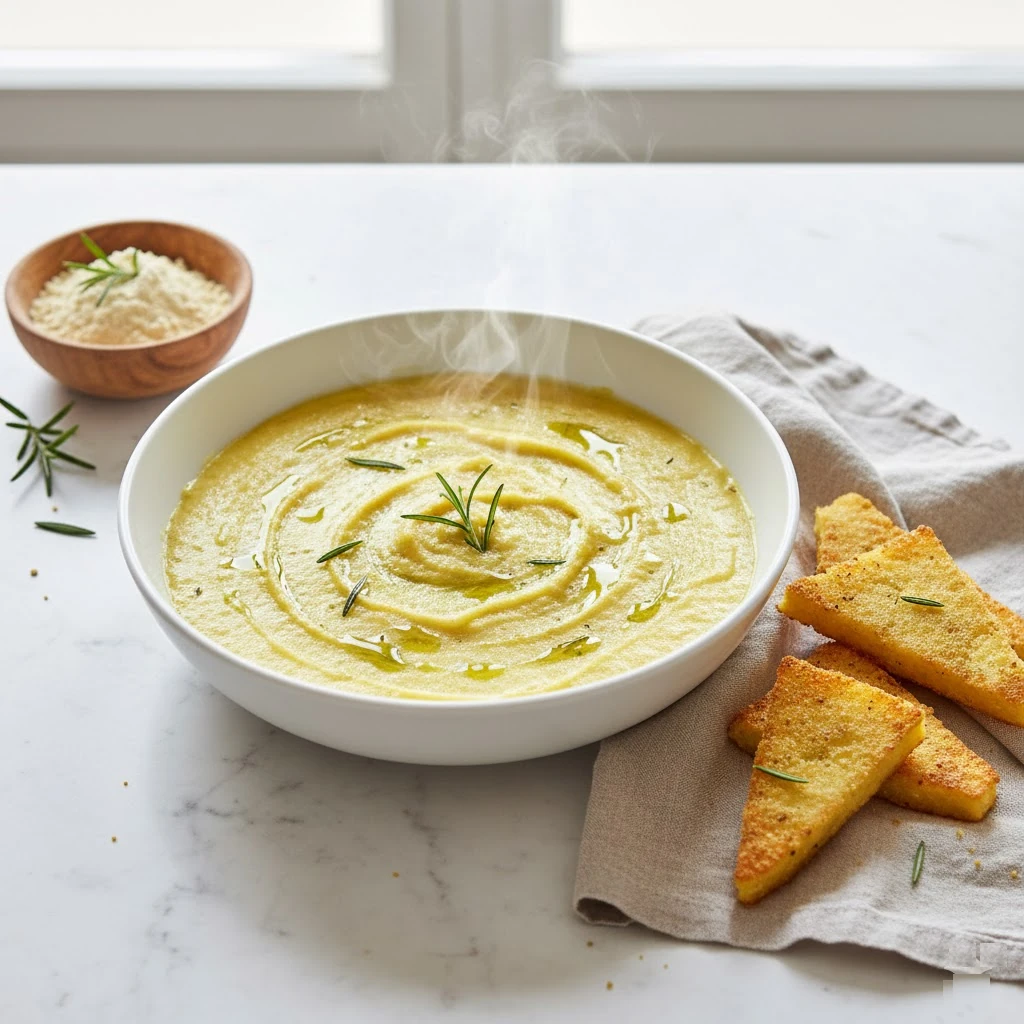
Panissa Ligure (Crispy Chickpea Flour Fries)
Panissa Ligure is the ultimate expression of Genoese street food—a simple, gluten-free delicacy made from chickpea flour, water, and salt. Similar to Farinata but prepared differently, the chickpea batter is cooked like polenta, poured into a block, allowed to set completely, and then cut into thick sticks or cubes before being deep-fried until golden and incredibly crisp. The result is a savory, nutty fry with a soft interior, perfect served hot with just a sprinkle of salt and freshly ground black pepper.
History: The Street Food of Genoa
Panissa, like its close relative Farinata (a thin chickpea pancake), has ancient roots in Liguria and the neighboring regions of Provence (where it is known as panisse). Chickpea flour was historically a staple in port cities like Genoa, serving as an affordable and highly nutritious base for simple meals. Panissa Ligure became a classic 'zero-waste' preparation, transforming the chickpea base into a fry that could be enjoyed hot, wrapped in paper, and served quickly as inexpensive street food in the alleyways (carruggi) of Genoa.
Note on Regional Variations: Be aware that in Piedmont, particularly the Vercelli area, Panissa refers to a hearty risotto-style dish made with rice, Borlotti beans, and cured pork.
Ingredients: Simplicity Defined
The beauty of Panissa is its minimalist ingredient list:
- Chickpea Flour (Farina di Ceci): This is the core ingredient. It must be fresh and finely ground for the smoothest batter.
- Water: Simple tap water is all that is required for hydration.
- Salt: Essential for flavor, often added in generous quantities.
- Oil for Frying: A neutral, high smoke point oil (like peanut or vegetable) is best for deep frying, though Ligurian purists might use olive oil.
- Serving: Traditionally dressed only with fresh black pepper and sometimes a few drops of lemon juice.
The Technique: Cooking, Setting, and Frying
Step 1: Preparing the Batter
- Whisk the chickpea flour and cold water vigorously in a heavy-bottomed pot until completely smooth and lump-free. Add the salt.
- Place the pot over medium-high heat. You must stir the mixture constantly as it heats up, or it will quickly stick to the bottom and form lumps.
- Continue cooking for about 15–20 minutes after it starts to bubble, until the mixture becomes very thick and pulls away from the sides of the pan (the consistency of a very stiff polenta).
Step 2: Setting the Block
- Immediately pour the hot chickpea mixture into a lightly oiled, shallow baking pan or loaf tin.
- Smooth the top quickly with a spatula. The final layer should be about 1 inch thick.
- Allow the block to cool to room temperature, then cover it and refrigerate for at least 3 hours (or preferably overnight) until it is completely firm and solid.
Step 3: Cutting and Frying
- Once firm, turn the block out onto a cutting board. Cut it into sticks or cubes about 1 inch thick and 3–4 inches long.
- Heat the frying oil to 350–375°F (175–190°C).
- Fry the Panissa sticks in small batches until they are deeply golden brown and have a crisp crust (about 3–5 minutes).
- Remove the sticks to a paper towel-lined plate and season generously with salt and pepper immediately.
Step 4: Serving
- Panissa must be served immediately while the outside is still hot and crisp.
💡 Troubleshooting & Chef's Notes
The main challenge is achieving a smooth batter and a firm block:
| Issue |
Cause |
Solution/Tip |
| Batter is lumpy/clumpy. |
Did not whisk the flour into the cold water thoroughly before heating, or cooked too fast. |
Whisk vigorously until smooth before applying heat. If lumps form, try forcing the finished mixture through a coarse sieve before pouring into the pan. |
| Sticks are too soft/fall apart when frying. |
Not cooked long enough, or not chilled long enough. |
The batter must be cooked until very stiff. Ensure the block is chilled overnight to maximize firmness. |
| Panissa is greasy. |
Oil temperature was too low. |
Ensure the oil is hot enough (350–375°F). Frying quickly at high heat prevents excessive oil absorption. |