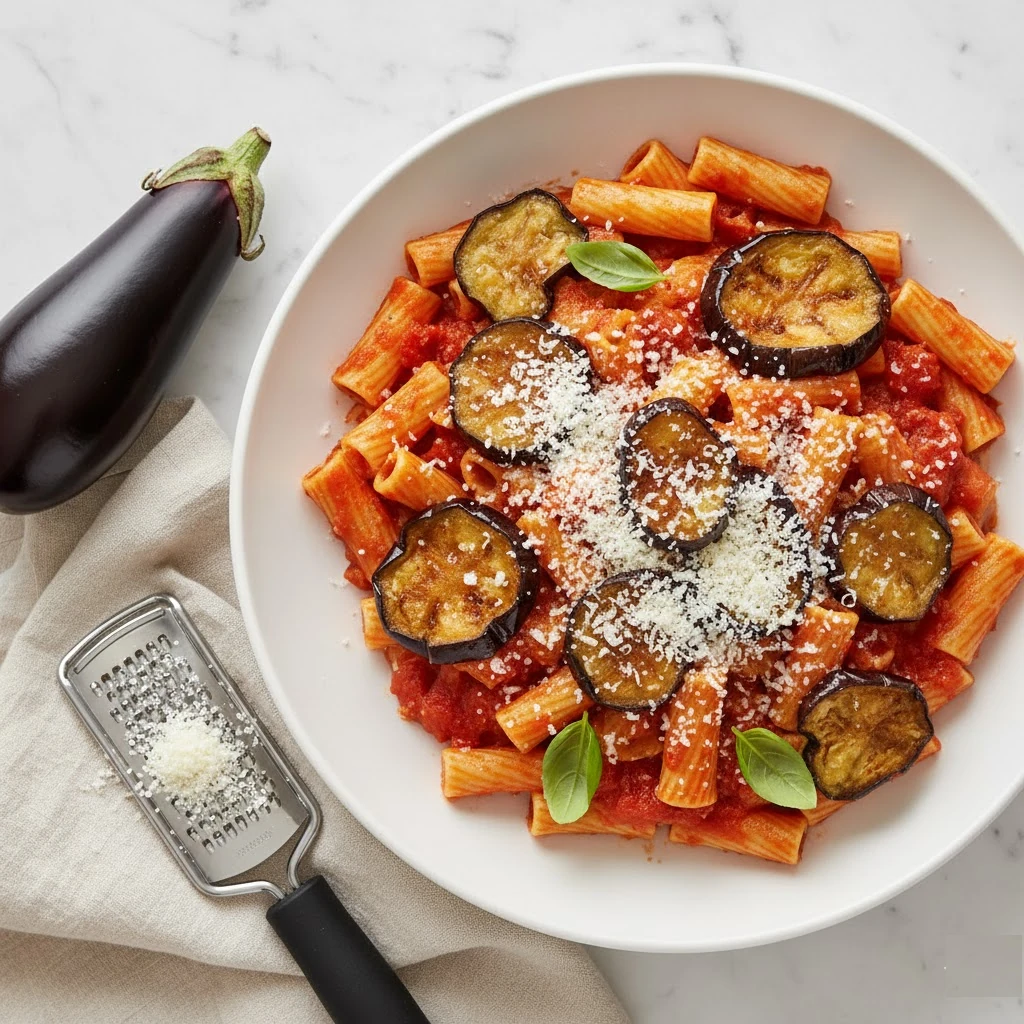
Pasta alla Norma (Sicilian Pasta with Eggplant and Ricotta Salata)
Pasta alla Norma is the vibrant, flavorful soul of Sicilian cuisine, specifically originating in Catania. This iconic dish is celebrated for its perfect balance of textures and flavors: a simple, sweet tomato sauce, rich pieces of fried eggplant (melanzane), and a final, crowning element of salty, aged Ricotta Salata. Traditionally paired with short, tubular pasta, it is a hearty and elegant vegetarian meal. The dish is named in honor of the Catania-born composer Vincenzo Bellini and his masterpiece opera, Norma, for its presumed perfection.
History: The Operatic Dish
Pasta alla Norma was created in the city of Catania on the eastern coast of Sicily. Legend suggests that a local writer or theater critic, upon tasting the dish for the first time, exclaimed that it was a “Norma,” meaning it was as complete and perfect as Bellini's opera of the same name. The dish is a celebration of local produce—the summer bounty of ripe tomatoes, flavorful basil, and, most importantly, the dark purple, tender Sicilian eggplant, often called melanzane a pernice.
Ingredients: The Fried Melanzane
The success of Pasta alla Norma hinges on two non-negotiable regional ingredients:
- Eggplant: Use Italian or globe eggplants. The slices must be salted and rested to draw out moisture and bitterness before being fried. They should be fried in olive oil until golden brown.
- Tomato Sauce: A simple, quick-cooking sauce made with fresh or high-quality canned tomatoes, onion, and plenty of fresh basil. Garlic is often omitted in the purest versions.
- Cheese: Ricotta Salata is essential. This is a firm, dry, white sheep's milk cheese that has been salted and aged. It is grated over the finished dish, providing a sharp, salty contrast to the sweet sauce and rich eggplant. Do not substitute with fresh ricotta or Parmesan.
- Pasta: Short, tubular shapes like Maccheroni, Rigatoni, or Ziti are ideal for catching the small cubes of eggplant and sauce.
The Technique: Frying and Combining
Step 1: Preparing the Eggplant
- Slice the eggplant into rounds or 1-inch thick cubes. Sprinkle generously with salt and let rest in a colander for 30 minutes to draw out moisture. Pat them dry before frying.
- Fry the eggplant in hot olive oil in batches until deeply golden and tender. Drain them thoroughly on paper towels.
Step 2: Building the Sauce
- Start a simple tomato sauce by sautéing a minced onion in olive oil until soft.
- Add the crushed tomatoes and plenty of fresh basil leaves. Simmer for about 20 minutes until slightly reduced.
- Season with salt and a pinch of sugar (if needed to balance acidity).
Step 3: Combining and Finishing
- Add most of the fried eggplant to the tomato sauce and stir gently.
- Cook the pasta in lightly salted water until two minutes before it is al dente. Reserve starchy pasta water.
- Transfer the undercooked pasta directly into the sauce pan. Toss and finish cooking, adding a splash of pasta water if the sauce becomes too dry.
Step 4: Serving
- Serve the pasta immediately, garnishing each bowl with the remaining fried eggplant pieces.
- The final, essential step: Liberally grate Ricotta Salata over the top of the dish.
💡 Troubleshooting & Chef's Notes
| Issue |
Cause |
Solution/Tip |
| Eggplant is greasy. |
Oil temperature was too low, or eggplant was not drained/pat dry properly. |
Ensure the eggplant is fully dried after salting. Fry at a higher temperature and drain immediately on paper towels. |
| Sauce is too watery. |
Tomatoes were not reduced long enough, or pasta water was added too generously. |
Simmer the tomato sauce until visibly thick before adding the pasta. If watery, continue tossing the pasta in the sauce for a minute or two on low heat. |
| Dish lacks salt/punch. |
Used regular ricotta or Parmesan instead of Ricotta Salata. |
Ricotta Salata is the required salty counterpoint. If unavailable, use a sharper, drier cheese with a higher salt content. |